
Results

Client names stay private. The results don't.

Three engagements, each told the same way: the challenge, the reframe, what we did, and what changed.

New-hire onboarding

From 13 days to 5

The challenge
A 13-day onboarding program tried to cover every possible scenario in live sessions. New hires sat through software demos they could have practiced on their own.
The reframe
The program didn't need more content. It needed the right format for each piece.
What we did
Moved software skills into short self-paced modules. Kept live sessions for process, judgment and questions. Built practice into every day, so new hires used each skill the same day they learned it. Built clear pathways and job aids so new hires knew what to do next. Ended the week with a skills check: new hires processed realistic files while a trainer observed. Used AI tools to speed up production.
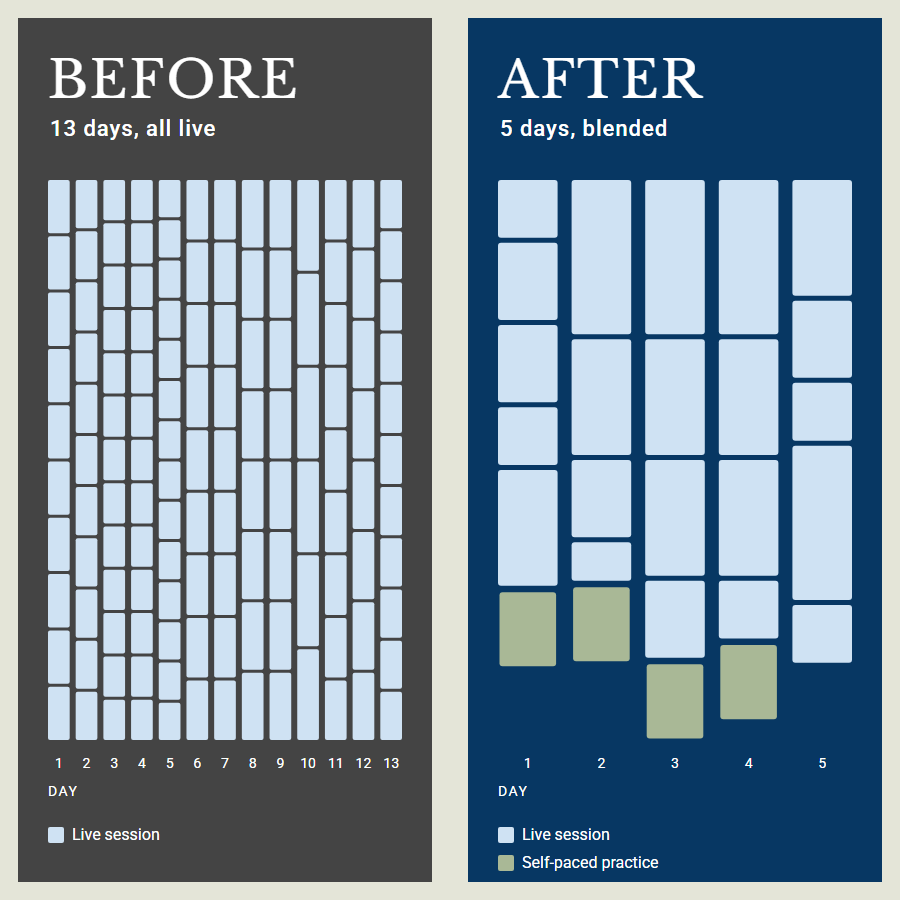
Before and after training schedules. Before: 13 day columns, each a stack of live sessions of the same kind. After: 5 day columns with live sessions of different lengths and a block of self-paced practice at the end of most days.
Training schedule, before and after.
The result 13 days to 5

Onboarding time cut by more than half. Content production time down 60%, with 90%+ learner retention and adoption.
Back to top

Leadership development

From 100+ slides to a six-unit program

The challenge
A senior executive asked us to make a 100+ slide leadership deck "more engaging" for rising managers in a 4,000-person organization.
The reframe
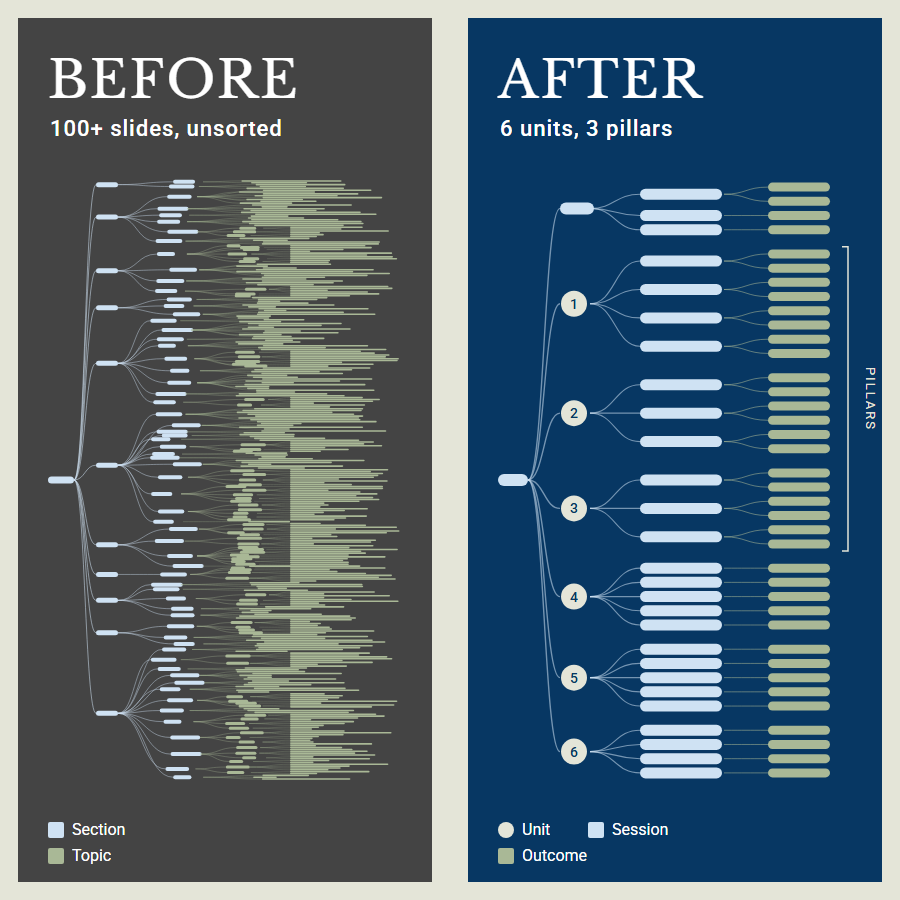
The deck didn't need more engagement. It needed structure: a sequence, a build from basic to advanced skills, and practice.
What we did
Mapped the content to leadership competencies with the sponsor. Organized it into three pillars and six units of 50-minute live sessions, with options to adapt each session to the group. Added scenarios, practice activities, job aids, and audio and video summaries, all accessible by default. Proposed an evaluation plan.
Before and after curriculum maps. Before: one long, uneven tree of more than 300 unsorted topics. After: an introduction and six numbered units, the first three marked as the leadership pillars, each with a few sessions and one or two outcomes per session.
Curriculum map, before and after.
The result 6 units, 50 minutes each

A structured program for cohorts of rising managers, an estimated 30 to 40 participants, designed in about two months alongside other work.

Back to top

Microsoft 365 and Copilot adoption

From paying for it to using it

The challenge
An organization was paying for Copilot, and few employees used it. Inboxes were overloaded, and staff didn't know the newer Teams features that could help.
The reframe
People didn't need a feature tour. They needed a reason to use the tool today, and a habit of checking what AI gives them.
What we did
Designed live virtual sessions built on real, relatable use cases, plus 5- to 8-minute self-paced lessons. Every lesson ends with practice people can use that day. For Copilot: prompt it, then prove it. For Teams: every capability paired with a boundary, so staff stay connected without being tethered.
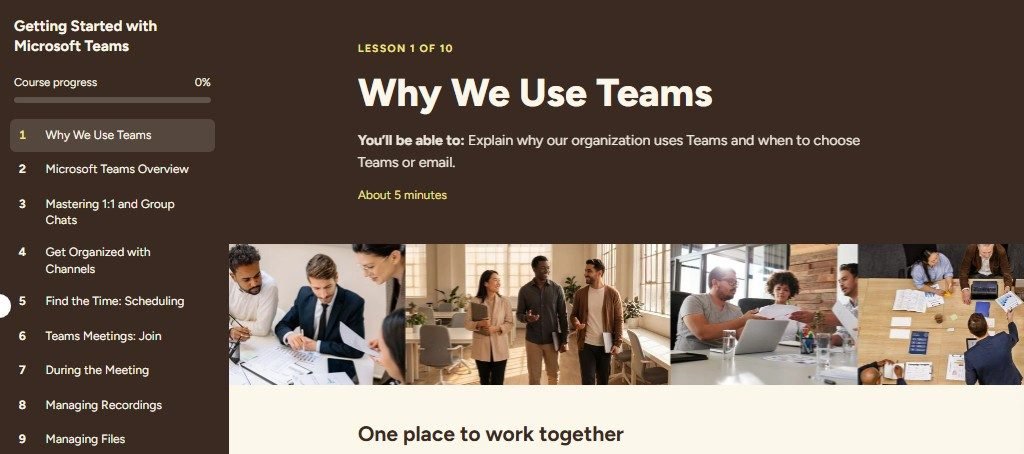
Lesson 1 of a self-paced Teams course, titled Why We Use Teams, with a lesson menu on the left and a 5-minute time estimate.
A self-paced lesson from a Teams training program.
The result Approved on first review

The client approved the outline and prototype on first review and reported strong feedback on the real-world use cases.

Back to top

What would your version of these numbers be?

Tell us where training is taking too long or not sticking. We'll help you find the fix.

Book a strategy call